Jack Hadley
Yards Project
Outgrowing Our Home
A Once-In-A-Lifetime Opportunity
The Imperial Hotel and Hambleton-Williams Shotgun House have been in severe decline for decades. As one of the few remaining Green Book sites, the hotel is especially at risk and in urgent need of restoration. Yet this challenge offers an extraordinary opportunity for the Jack Hadley Black History Museum and the Thomasville community. With the recent acquisition of the hotel, shotgun house, and adjacent land, there is a rare chance to create a unified campus that preserves these stories at their fullest while safeguarding the historic sites for the future.
Document, preserve, and
educate on African American History and
Culture in Southwest Georgia
and beyond.
Significant Acquisitions
In 2018, gifts from local foundations enabled the Jack Hadley Black History Museum to purchase the historic Imperial Hotel and the neighboring Hambleton-Williams Shotgun House.
Greenbook Hotel
Imperial Hotel
Built in 1949 and operated until 1969 by Harvey and Dorothy Lewis Thompson, the Imperial Hotel was Thomasville’s only hotel that would accommodate Black travelers prior to desegregated accommodations. The Imperial Hotel was featured in The Green Book, a guide for African American tourists on hotels, restaurants, and shops that would reliably serve them during the Jim Crow era. The Imperial Hotel has national significance as it is one of only three in the region that is still viable to restore.
Outgrowing Our Home
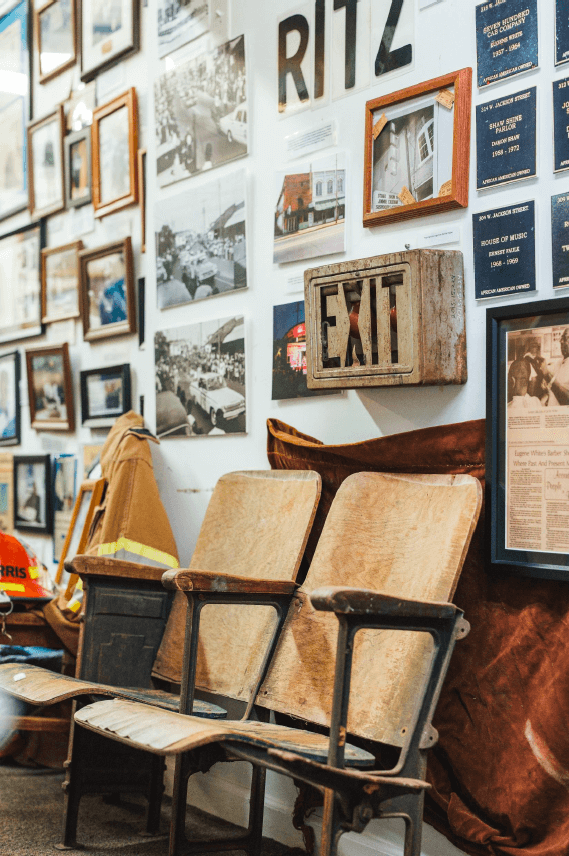
The Jack Hadley Black History Museum gained its first permanent home at the site of Douglass High School more than 15 years ago. From 1902 to 1970, Douglass High School served as the all-Black city high school in the days of segregation. When integration took place, it lived on as a middle school, then eventually an elementary school. In 2002, the Thomasville city Board of Education sold the complex to the Douglass High School Alumni, and in 2006, renovations began on the Museum’s current space.
While it has served as an ideal backdrop for the collection of Jack Hadley, the space presents challenges for a modern-day museum. Not designed for a growing institution of its kind, the complex cannot accommodate exhibiting the full collection. Nor can it support large numbers of visitors and foot traffic, limiting the educational programming opportunities for Thomas County Public School and other inquisitive students ages 3-100. The complex lacks archival storage for objects not on view and, since it was built in 1902, does not have the technology infrastructure necessary for the research and multimedia needs of an interactive Museum.
From its home nestled in a historic African American neighborhood, JHBHM has the opportunity to make an important move to Thomasville’s “main street” on the other side of the railroad tracks. In addition to the benefits of a campus location that JHBHM owns, the Museum is positioned to boost the economy and make history in its own right.
Our New Vision
Plan Highlights
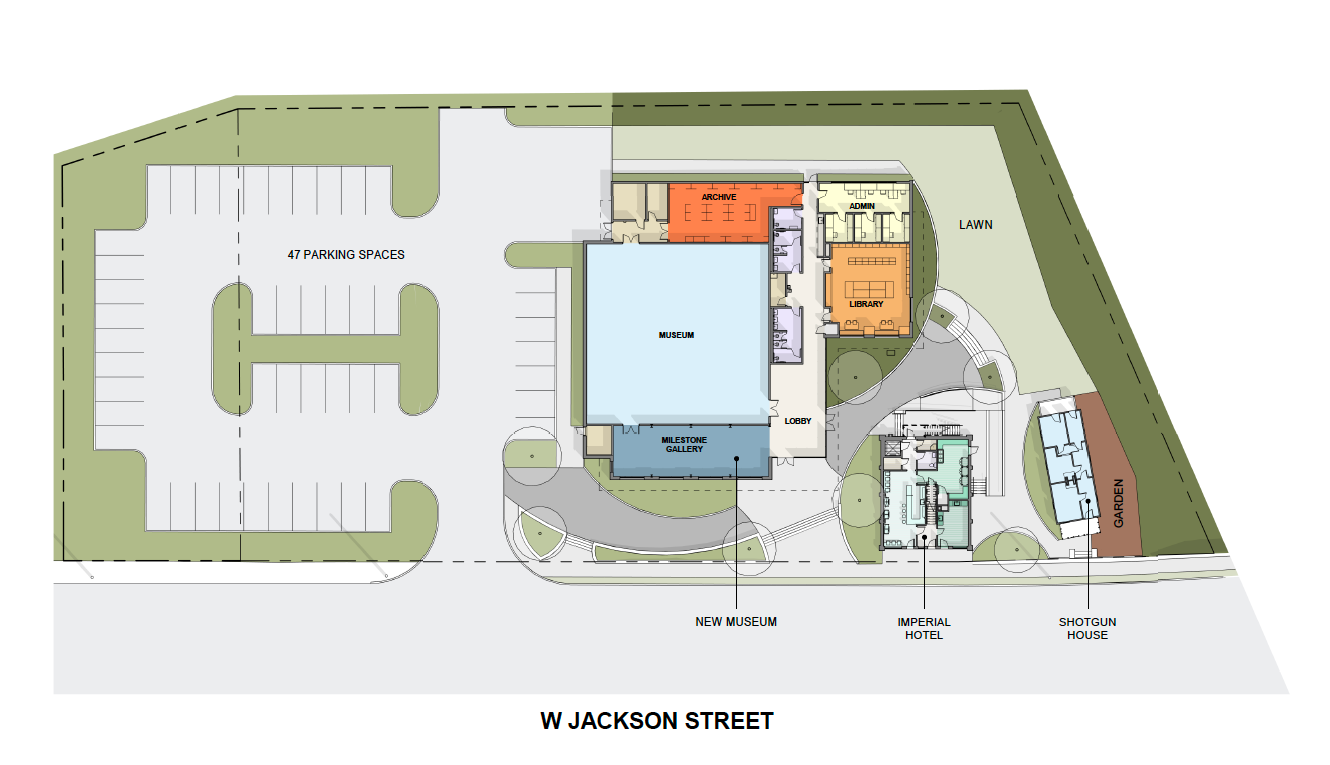
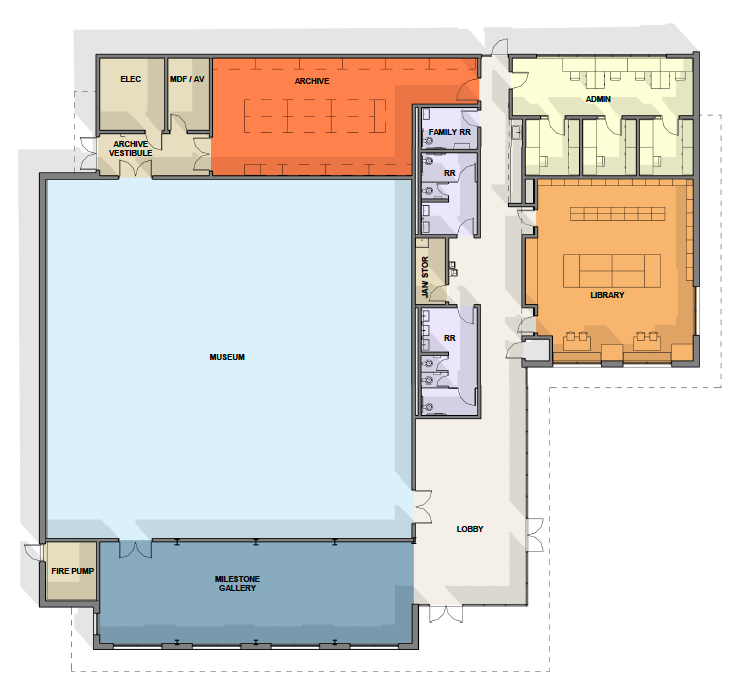
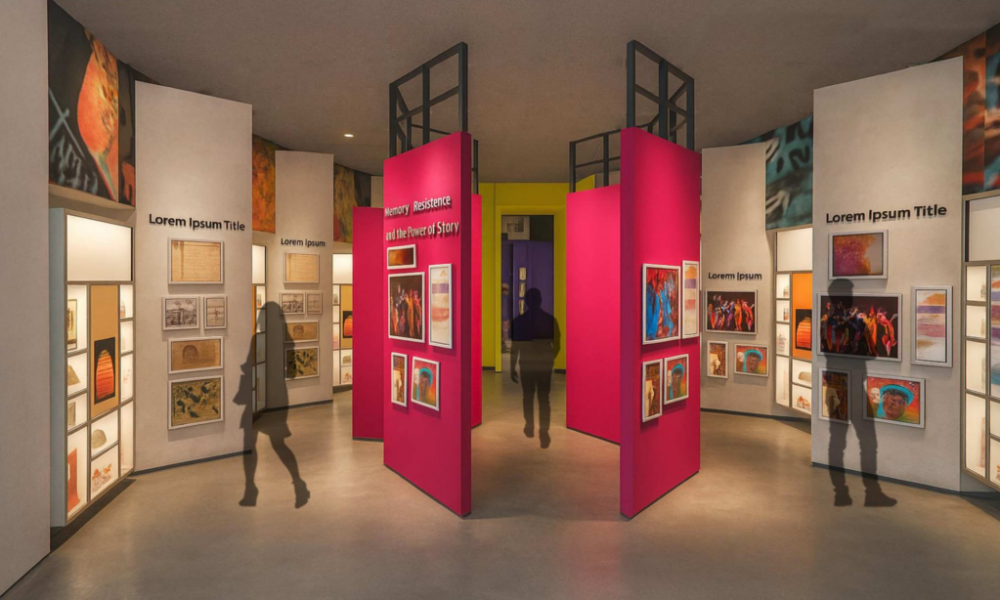
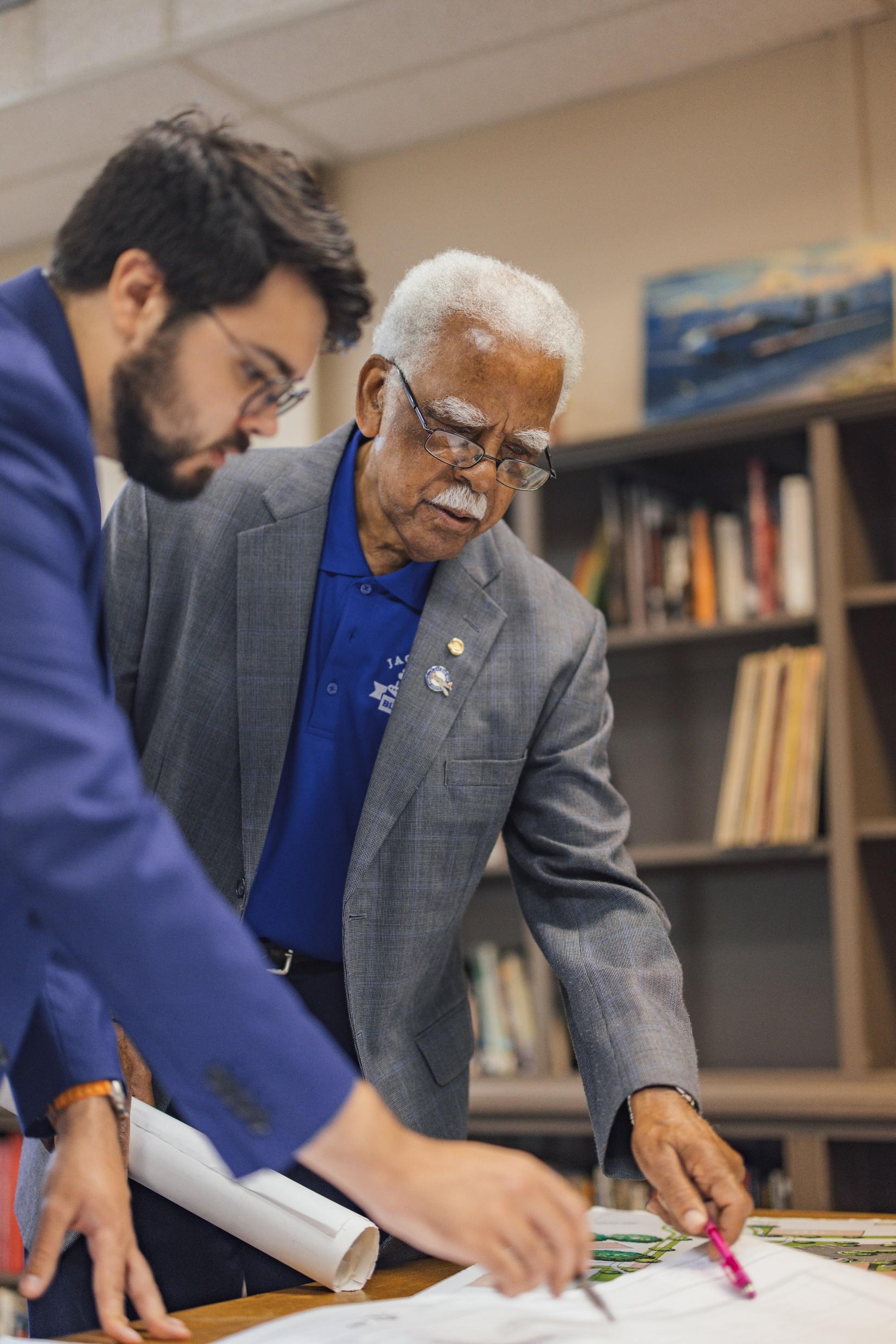
Designed by renowned Atlanta architects in partnership with one of the nation’s top exhibition design firms, the reimagined 12,000 square-foot space completes the campus surrounding the Imperial Hotel and Shotgun House and protects these historic landmarks that stand as testaments to the resilience and contributions of African Americans in Thomasville.
Plans for the new construction include: